Project-based agencies hit a ceiling. Subscription tech teams don't. The math behind why is the most underestimated decision a busy founder makes when picking how to scale tech work.
01The project model fails at scale
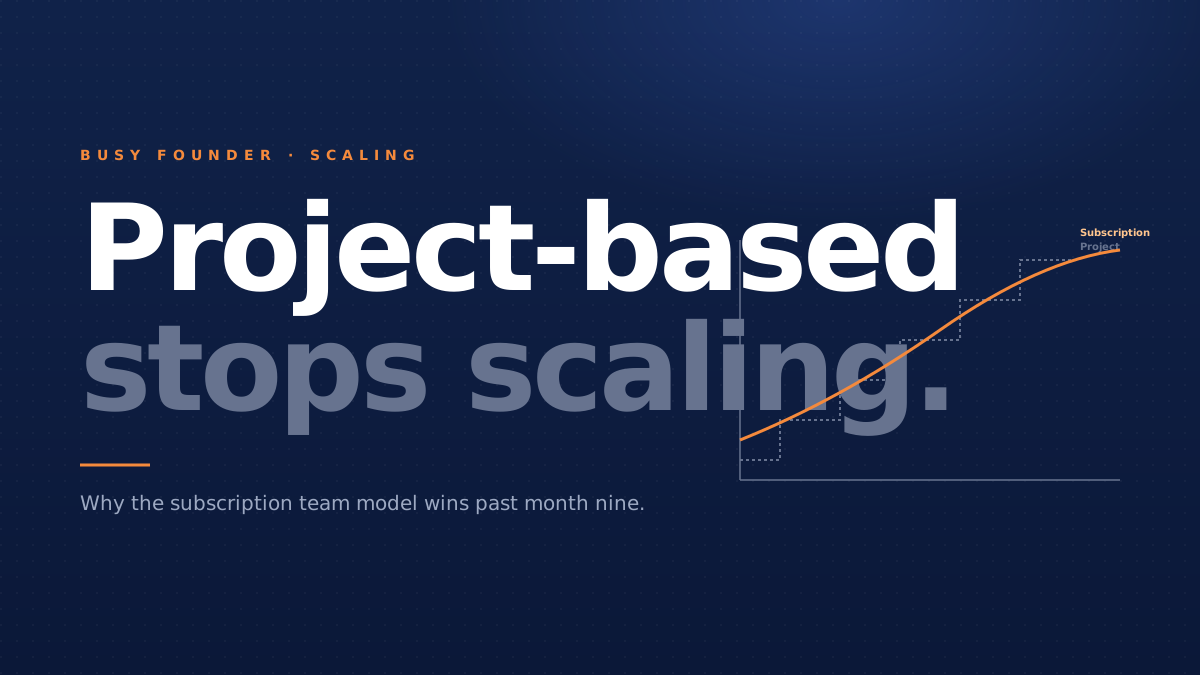
A project agency's revenue grows in steps. Each new project = a new step. To grow, the agency must win more proposals — which means more sales effort, more pitches, more relationship-building, more time not shipping. The team between projects is idle or bouncing to other clients.
For the founder, the project model creates the same step shape:
- You hire a project agency for a deliverable
- They ship it
- Contract ends, team disperses
- Next quarter you need follow-up work
- You re-engage, they re-onboard, costs spike
- The follow-up always takes longer than the original because nobody's holding context
The gaps between steps are where the cost compounds. Each re-engagement costs roughly 25% of the original project just in re-onboarding overhead. By year two, the project model has cost you 30-40% more than a subscription would have — and you have a fractured codebase to show for it.
02Subscription compounds
A subscription tech team flips both sides of the math:
For the founder — no re-engagement cost. The team is already there next quarter. Context holds. The follow-up work goes faster than the original because the team learned your business doing the first sprint. By month 12, output per dollar is roughly 2x what a project model delivers, because there's zero overhead time spent re-aligning
For the team — revenue grows with retention, not with proposals. The team can focus 100% on the work because they're not constantly selling the next project. This shows up in output quality. A team that's heads-down on your business produces work that compounds. A team that's pitching while shipping splits attention
The result is a smooth compound curve instead of a stair-step. Same total cost, dramatically different output.
03When project agency still wins
The project model isn't always wrong. It works when:
- You have a discrete deliverable with a defined end — a website launch, a brand refresh, a fixed-scope migration. Truly one-and-done work
- You're sourcing a specialist for a one-time skill — security audit, conversion-rate audit, compliance work. Hire the expert, ship the deliverable, move on
- You have internal capacity to run the engagement — a CTO, head of ops, or product lead who can absorb the re-engagement overhead so it doesn't fall on the founder
If none of those apply — if you have ongoing work, no internal capacity, and the founder is the de facto project manager — subscription dominates project.
04The "switching cost" objection
Most founders who push back on subscription have the same objection: "but I'm already with a project agency, switching is expensive." This is usually wrong.
The expensive part of the switch happens once. Six months later you're on a smooth curve. The expensive part of staying with the project model happens every quarter forever. Compound the two over 18 months and switching is almost always cheaper.
The honest blocker is usually different: the existing relationship has emotional weight. The agency has been with you since the early days. They got you here. Switching feels disloyal.
That's a real consideration but it's not a business consideration. The right move is usually to thank the agency, transition gradually, and move the recurring work to a subscription team. Keep the agency for one-off specialist projects where they're genuinely best-in-class.
05What a ready team subscription actually includes
For ~$4,500-6,500/month: design, development, infrastructure, weekly shipping rhythm, monthly strategy review, one named point of contact. No proposals. No re-onboarding. No "let's scope the next sprint." Just the ongoing work, with capacity that flexes up and down based on what your business needs.
The reason this model wins past month nine: it removes the sales cycle from your tech function entirely.
06What to do this week
If you're using a project agency for ongoing work, calculate the true 12-month cost:
- Sum of project fees over the year
- Re-engagement overhead (~25% per re-engagement)
- Context-loss cost (work that had to be redone or re-explained)
- Your time managing the gaps between projects
If that total is within 20% of what a subscription tech team would cost, switching is cheaper and gives you a smoother curve. Most founders who run the math find the project model was 30-50% more expensive than they realized.
The free founder tech audit has a project-vs-subscription calculator built in — runs the 12-month true cost in about 15 minutes. Useful even if you're not ready to switch.