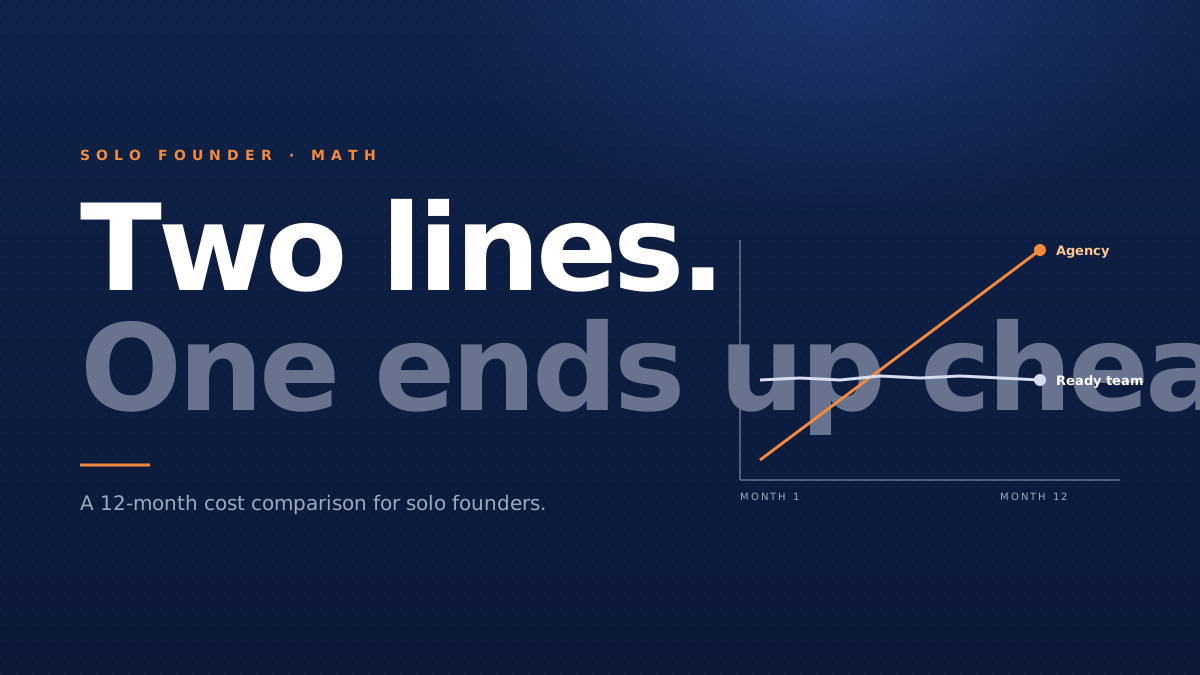
Most founders ask the wrong question when they're picking how to build.
The question they ask is: how much per project? The question they should ask is: what does this cost me at month six?
Hire an agency for one website and the math looks fine. Hire that same agency for six months of "we keep iterating" and the math stops working. You're not paying for code — you're paying for the people standing between you and code.
01What an agency actually costs
A retained agency at $14k/month isn't paying $14k for dev work. It's paying $14k for:
Almost half goes to the layer between you and the people shipping. You pay it because the layer exists — not because it's making your product better.
A ready tech team flips it. You get one contact, calibrated specialists, and a flat monthly that's roughly a third of agency retainer. There's no account manager because the team itself owns the outcome. There's no overhead line because there's no agency wrapped around it.
02The compounding gap
Here's where it gets interesting. Cost is one dimension. Calibration is the other.
An agency rotates people. Every quarter you re-explain what your business does. The dev who shipped the last sprint isn't the one shipping this sprint. Context resets.
A ready team holds context. The compounding effect is what kills the agency at month six — not the dollar figure.
The line on the bottom (ready team) keeps climbing because the team isn't relearning your business every two weeks. The dashed line (agency) plateaus because re-onboarding costs catch up.
03When an agency is the right call
I'm not saying agencies are bad. Here's when they're the right pick:
- One-shot project, no follow-up. You need a deliverable, not an ongoing partner. A landing page for a launch. A pitch deck.
- You have a CTO who can manage agency relationships. Someone in-house who handles the handoffs, briefs the AM, reviews the output. The overhead layer matters less when you have your own layer.
- Specialized one-time work. Brand identity, motion design, a single piece of strategy. Agencies are built for this.
For everything else — for the work that compounds, for the work where context matters, for the work that needs to keep moving past month six — the math is on the team's side.
04What to do this week
If you're three months into an agency relationship and the brief still gets re-explained every meeting, that's the signal. You're paying overhead to maintain the calibration you're not getting.
Drop me a note — or take 20 minutes with the free founder tech audit and we'll show you exactly where the calibration is leaking.