You can ship without a CTO. Plenty of founders do. The question isn't whether — it's whether you regret it later.
The regret almost never comes from the tech you picked. It comes from the way the work was held. Six months of fast shipping with no anchors looks impressive on the timeline and feels terrible to maintain.
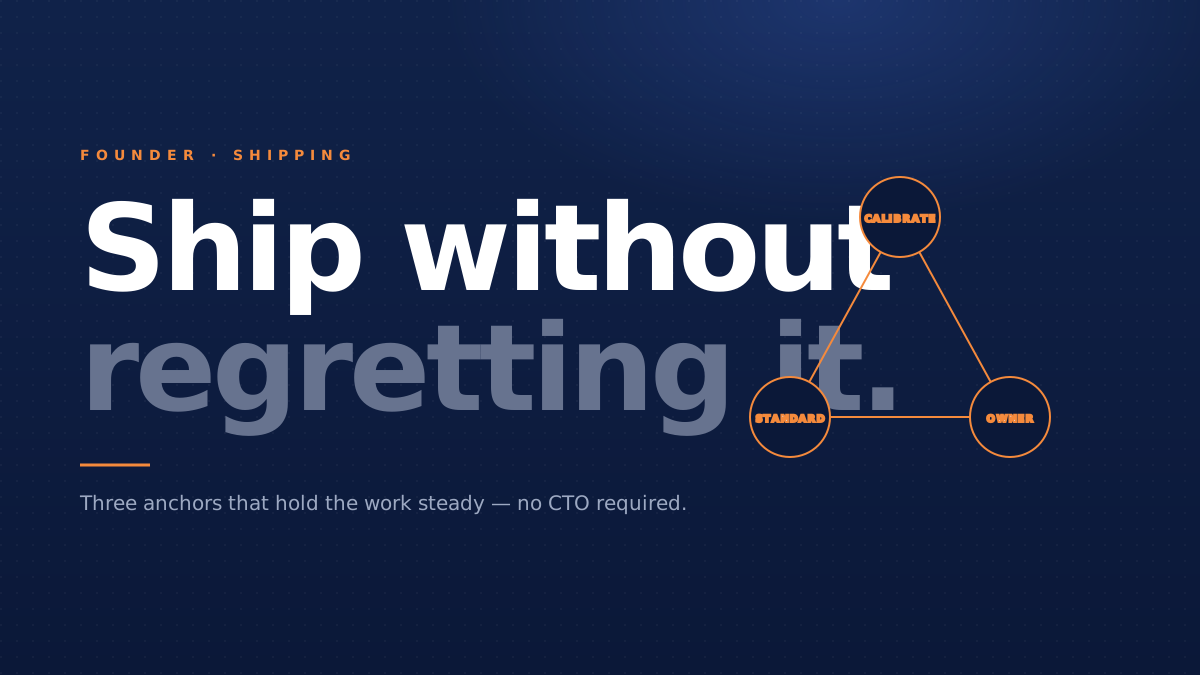
Three anchors prevent the regret.
01The three anchors
Calibration. The team has internalized your business — the customer, the constraint, the goal. They're not relearning the brief every sprint. When new work comes in, they already know which trade-offs are okay and which aren't. This is the single thing freelance-rotation models can't deliver.
Standard. A visible, written description of what "good" looks like — for the codebase, for the customer experience, for the response time on issues. Not a Notion page nobody reads. A single page anyone on the team can point to when a decision needs to be made. If the standard isn't visible, drift is inevitable.
Owner. One named person who owns each major outcome. Not three. Not a committee. The owner makes the call when the team disagrees. Without an owner, decisions either don't happen or happen badly — which is the most common shape of regret.
You can have all three without a CTO. You cannot ship sustainably with fewer than three.
02What goes wrong with two out of three
The most common failure is calibration + standard, no owner. The team is sharp, the docs exist, but every decision needs a meeting. Velocity collapses.
Second most common: owner + calibration, no standard. The decisions get made fast but the codebase drifts because nobody wrote down what good is. Six months later you're paying down debt instead of shipping features.
Third: standard + owner, no calibration. Decisions are fast and the code is clean — but every spec gets re-explained, the team builds the wrong thing 30% of the time, and the founder ends up doing PM work for free.
The drift is invisible. The shipping continues. The dashboard looks healthy. Then one day a customer asks for something and the team realizes the only path to delivering it is a partial rebuild. That's the moment of regret.
03How to install all three without hiring a CTO
You don't need a CTO to install the three anchors. You need:
- A team that's run this configuration before. Asking a fresh team to invent calibration / standard / owner from scratch is asking them to do a CTO's job for senior-dev pay. They'll fake it.
- A written brief that's updated weekly. Two paragraphs. The customer, the constraint, the next thing. Anyone joining a call should be able to read this and know what to do.
- An async-first rhythm. Standards and ownership only survive in writing. Verbal-only standards drift the moment the team grows past two people.
A ready tech team has these three anchors built in by default. That's the whole point of the model — you get the structure a CTO would build without the title, the equity, or the politics.
04What to do this week
Open a doc. Write three sentences:
- "The one thing the team needs to internalize about our business is…"
- "When we say 'good code' or 'good UX', we mean…"
- "The person who decides when the team disagrees is…"
If you can't fill in any of the three confidently, that's the gap. Not the framework. Not the dev velocity. The anchor that isn't there.
The free founder tech audit has a section called "Are you set up to ship without regret?" — it's a five-question check on exactly this. Worth twenty minutes before you decide to hire anyone.